Meet Our Fellows
Current Denbo Center Fellows, 2024–25
With the support of the UT Chancellor’s Office, the Office of Research and Engagement, our affiliated arts and humanities departments, and the College of Arts and Sciences, the Denbo Center supports the creation of groundbreaking humanities research through our fellowship programs. These individuals—Faculty Fellows, a Digital Humanities Faculty Fellow, Graduate Fellows, and a Marco Haslam Dissertation Fellow—are listed below.
Faculty Fellows

Sam Blankenship
Assistant Professor, Department of Classics
Project Title: Managing the Past: Historiography Between Persia, Greece, and Judea
Project Description
Managing the Past: Historiography Between Persia, Greece, and Judea offers a corrective alternative to traditional accounts of the emergence of historiography as a cultural product unique to the ancient Greeks. The emergence of Greek historiography was conditioned, I argue, by the exposure of Greek intellectuals to the imperial practices—including the imperial history-writing—of the Achaemenid Persians, whose vast empire extended to and often included the easternmost parts of the Greek world. During the fellowship year, I will execute a comparison between Achaemenid Persian inscriptions, Greek histories of Persia, and roughly contemporary Second Temple Jewish depictions of interactions between Persia and the imperial province of Yehud and the broader Jewish diaspora throughout the empire. I will argue that certain features of official Persian management of history impressed both Greek and Jewish historians of the empire as potentially powerful intellectual strategies for organizing and presenting information; but recognition of the limitations of, or contradictions within, Persian imperial history-writing spurred these writers to reflect critically on the best ways to account for the past.
About Sam Blankenship
Sam Blankenship is an Assistant Professor of Classics at UTK, with specialties in Greek historiography and on cultural interactions between Greeks and various peoples and political entities of the ancient Near East. She is currently completing a monograph on the influences of Achaemenid Persian treatments of past, present, and future history on contemporary Greek and Jewish intellectuals, as well as a study of Alexander the Great’s program of self-representation through delegated historical narratives and other ideological materials.
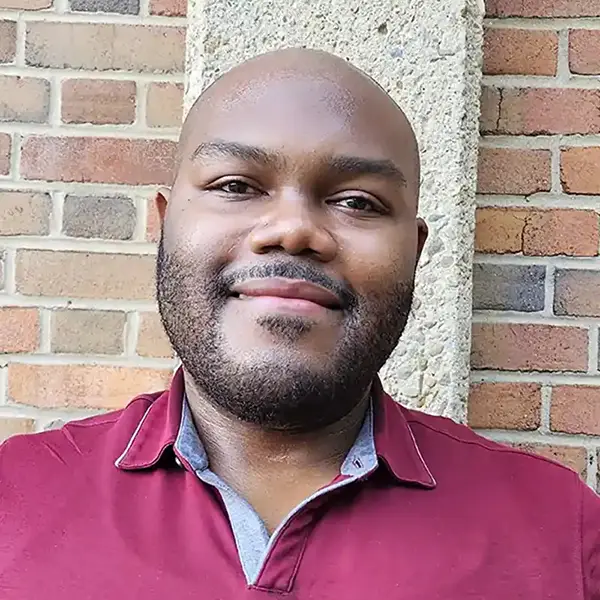
Dionte Harris
Assistant Professor, Department of English
Project Title: Boyhood: Black Becoming, Queer Being, and the Question of Life
Project Description
This project examines the figure of the queer black boy in 20th- and 21st-century African American literary and cultural productions. By exploring how black writers and artists use queer black boys and boyhoods to complicate discourses on black sexualities, black queer masculinities, and black childhoods, Boyhood argues that the queer black boy functions as a key figure, trope, and site of analysis in contemporary black cultural productions. Recognizing black childhood, black queerness, and black masculinities as interconnected categories of analysis, I argue that the queer black boy is a critically discursive form of masculine identity that is often incongruent with the normative scripts of black sexuality and masculinity. Despite this, black artists and the characters that populate their work invent innovative aesthetic strategies to articulate the queerness of black boyhood. In this way, my project not only reconstructs how scholars theorize childhood and masculinity but also provides more nuanced methods for approaching blackness and queerness and the varied ways in which they inflect the trajectories of childhood and masculinity.
About Dionte Harris
Dionte Harris (he/him) is a professor of English at the University of Tennessee. He specializes in 20th and 21st century African American literature, Black studies, critical theory, queer and trans theory, and gender studies. His current project, tentatively titled Boyhood: Black Becoming, Queer Being, and the Question of Life, examines the figure of the queer black boy in contemporary African American literary and cultural productions. His work on Barry Jenkins’s Moonlight won the Crompton-Noll Essay Prize awarded by the GLQ Caucus of the MLA and the Q/T Caucus of the ASA.

Erin Darby
Associate Professor, Department of Religious Studies
Project Title: Religion at the Boundaries: Making and Marketing Identity in the Borderlands of the Southern Negev
Project Description
Defining “identity” remains a notoriously difficult challenge across multiple scholarly disciplines in the humanities and humanistic social sciences, particularly owing to the category’s contested, flexible, context-driven, and polyvalent nature. When trying to reconstruct ancient identities, historians must rely on access to strong data with which to reconstruct with some plausibility the thoughts and feelings of an ancient population. All too frequently in ancient studies, in the absence of such data scholars borrow frameworks and theories to reconstruct what we do not know about the past. In so doing, we unintentionally produce accounts that, at best, remain vague, and, at worst, unwittingly create a picture of the ancient world that largely replicates our own modern positionalities, contexts, and subjectivities.
By addressing one particular community — artisans producing ceramic ritual assemblages in southern Israel and Jordan — this study seeks to model an approach grounded in the materiality of lived experience. Using the southern Negev as a test case, the study argues that to construct a historically specific, situational, and complex understanding of ancient identities, we must first center the occupational roles and organization of labor for any community under investigation. Rather than reading back into the past anachronistic nationalized political and religious frameworks, a study deeply embedded in the material culture of a particular community will be able to reconstruct the complex nexus of identity relations that impacted daily life.
About Erin Darby
Erin Darby is an associate professor of Religious Studies at the University of Tennessee and the co-director of the ‘Ayn Gharandal Archaeological Project in southern Jordan. Erin is an expert in the Hebrew Bible, ancient Near Eastern history, literature, and archaeology, and specializes in ancient religion and iconography. Her first book, Interpreting Judean Pillar Figurines: Gender and Empire in Judean Apotropaic Ritual (Mohr Siebeck 2014), and her co-edited volume, Iron Age Terracotta Figurines from the Southern Levant in Context (Brill, 2021) draw upon her knowledge of Late Bronze through Persian period female figurines in Israel, Jordan, Egypt, Syria, and Mesopotamia. Most recently she has been working on the purported Edomite shrine at the site of ‘En Hazeva in southern Israel and preparing a monograph focusing on the role of ancient craft specialists and religious identity in southern Israel and Jordan during the Iron Age.

Janelle VanderKelen
Assistant Professor of Cinema Studies and Time-Based Art, School of Art
Project Title: The Golden Thread
Project Description
The Golden Thread is a feature film that highlights ways unseen fungi slow climate change and mitigate its effects. This experimental documentary will be filmed in Germany near the home of Hildegard of Bingen, a 12th century abbess, proto-feminist scholar, composer, and self-taught naturalist. Her copious writings demonstrate a sophisticated understanding of more-than-human agency and continue to influence environmental dialogues nearly a millennia later. Hildegard’s life was marked by numerous mystical visions, and her writings mention intriguing images of golden strands connecting all life. The Golden Thread reimagines the connective threads from Hildegard’s visions as the glistening fungal mycorrhizae that recent scientific discoveries indicate are integral to interspecies plant collaboration, human agriculture, forest conservation, and carbon sequestration.
About Janelle VanderKelen
Janelle VanderKelen is an artist and curator based in Knoxville, TN. Her films and large-scale ceramic sculptures imagine alternative acts of relation between imperfect bodies (human, vegetal, geological, or otherwise). She uses stop motion and timelapse to make the inherent agency and movement of more-than-human entities visible for human audiences.
VanderKelen’s works have exhibited at institutions including The Museum of Moving Image in New York and Bow Arts in London. Her experimental films have screened at Ann Arbor Film Festival, True/False Film Festival, Brooklyn Film Festival, Athens International Film + Video Festival, and Antimatter [Media Art] Film Festival.
Her current feature project, The Golden Thread, received support from a 2025 Creative Capital Award. Other recent honors include juried awards at the 2023 Ann Arbor Film Festival, the 2023 Thomas Edison Film Festival, and the 2024 film+art vienna festival. VanderKelen was also a recipient of a 2023 Nohl Fellowship and 2023 MacDowell Residency.

Caitlin Dahl
Assistant Professor, Department of World Languages and Cultures
Project Title: Early Modern Accommodation: Galanterie, Gender, and Desire in Seventeenth Century France
Project Description
Seventeenth-century galanterie was a socio-literary phenomenon advocating a particular ideal relation between the sexes, where the reciprocity and mixing of men and women lead to refined sociability and discursive finesse. Early Modern Accommodation: Galanterie, Gender, and Desire in Seventeenth Century France argues that galanterie’s investment in heterosexual relations did not preclude its incorporation of queer, trans, and other nonconforming identities and desires. Through close readings of galant fiction, this project identifies different modes of literary “accommodation”—from narrative strategies to publication tactics—employed by early modern authors, editors, and publishers to create textual environments inclusive of nonconforming formulations of gender and desire—formulations that resist, elude, or exceed the heteronormative ordering of gender and sexuality that galanterie is widely understood to uphold.
About Caitlin Dahl
Caitlin Dahl currently holds a position as an Assistant Professor of French & Francophone Studies at the University of Tennessee, Knoxville. Dr. Dahl specializes in queer studies, gender and sexuality studies, and 17th-century studies with an interest in diverse texts from early modern media to fictional memoirs, to short stories. Her first article, “Queer Community Strategies: Diversity and Honnêteté in Choisy’s Histoire de la Marquise-Marquis de Banneville” was published in Cahiers du dix-septième in 2023.
An ongoing project of hers interrogates the intersections of galanterie, queerness, and race in early modern France. Dr. Dahl is also one of a group of eight specialists working on a digital, bilingual anthology of selected nouvelles or short stories published in Le Mercure galant, an important early modern periodical under the direction of Jean Donneau de Visé from 1672-1710. Dr. Dahl’s other research interests include modes of femininity under the Ancien régime, visual culture in early modern media, youth and gender fluidity in early modern French literature and thought, and the construction of Nation through literature.

Joe Stratmann
Assistant Professor, Department of Philosophy
Project Title: Kant: Between Reason and Prejudice
Project Description
In the eighteenth-century German rationalist tradition—exemplified above all by Immanuel Kant—prejudice was seen as an archenemy of achieving a culture of autonomy and enlightenment. The proper diagnosis of prejudice was the subject of intense and fruitful debate. This project seeks to advance our historical and philosophical understanding of prejudice in the following three ways. First, this project will contextualize Kant’s account of prejudice vis-à-vis earlier accounts in this tradition. Second, far from a peripheral feature of Kant’s thought, overcoming prejudice will be shown to be central to his critical rationalism. Third, this project will advance our contemporary understanding of prejudice by reconstructing a sophisticated (yet oft-neglected) framework for thinking about the nature and causes of prejudice.
About Joe Stratmann
Joe Stratmann is an assistant professor of philosophy at the University of Tennessee. He is interested in Kant, early modern philosophy (including its reception of Chinese philosophy), metaphysics, ethics, and the philosophy of hope.
Digital Humanities Fellows

Farre “Faye” Nixon
Assistant Professor of Landscape Architecture
Project Title: An Inquisition into Ubiquitous and Emerging Technologies as they Augment, Undermine, or Override the Natural World
Project Description
An Inquisition into Ubiquitous and Emerging Technologies as they Augment, Undermine, or Override the Natural World confronts the use of technology as a corrective to uncertainty in nature. Her current work uses art and design to investigate the ways technology treats some of the intangible, phenomenological, and esoteric aspects of nature that often resist scientific or rational modes of understanding.
About Farre “Faye” Nixon
Farre “Faye” Nixon is an Assistant Professor of Landscape Architecture at the University of Tennessee, Knoxville. For the fellowship, Faye is exploring how knowledge might be encrypted and communicated through material resistance and environmental entanglement in a post-digital world where technological infrastructures fail or recede. Using “analog reserves” such as the National Radio Quiet Zone in West Virginia as a focal point, she will blend ethnography, speculative fiction, and analog experimentation to examine what forms of knowledge storage and stewardship might survive us.
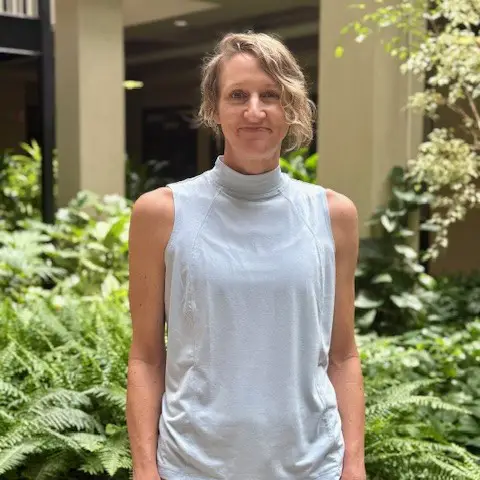
Heather Coker Hawkins
Assistant Professor, School of Art
Project Title: Harnessing Technology in Creative Practice: A Pathway to Well-Being and an Embodied Future
Project Description
This multi-modal research project investigates how effective cinematic strategies can elicit embodied responses and cultivate audience well-being. Combining critical theory with creative practice, the project spans dance film, video installation, virtual reality, and web design. Employing an inclusive, feminist framework, this project interrogates the role of technology in shaping human connection, perception, and attention. It extends from a background in live dance and site-specific performance, translating movement across screen-based platforms and back into physical environments, creating perceptual shifts that invite reflection and emotional engagement.
Central to the project is the question: how might art provoke shared understanding in a time of digital saturation? Rather than advancing technological innovation for its own sake, this work uses technology reflexively to critique its pervasive influence and to open space for dialogue around our relationships—with each other and with the tools we adopt. By positioning movement-based media as a conduit for presence and introspection, the project seeks to reveal the power of creative experience to generate connection, raise critical awareness, and support well-being in contemporary life.
About Heather Coker Hawkins
Heather Coker Hawkins is an Assistant Professor of Time-Based Art and Cinema Studies at the University of Tennessee. Her interdisciplinary research integrates critical inquiry with practice-based methodologies, focusing on embodied approaches to time-based media, including live performance, dance film, and video installation. Drawing on her training and experience as a dancer-choreographer (MFA, UCLA) and filmmaker (MFA, Chapman University), her creative work examines how affect, physical presence, and movement shape viewer experience and well-being. She teaches courses in cinema and video art production, performance in film and video art, collaborative artmaking, and graduate-level seminars. Her recent work includes a virtual reality project that critiques the medium’s technological frameworks and widespread cultural applications, extending her investigation into how embodiment and affective engagement can reframe digital art practices.
Graduate Fellows

Nick Strasser
Doctoral Student, Department of History
Project Title: Death Rays and Pure Planets: Continuities in German Science Fiction in the Age of the World Wars
Project Description
Nick’s dissertation exposes the disturbing reality of how German science fiction during the interwar period advanced extremist political rhetoric to preserve and retool already damaged nationalist-constructs of German identity and pursue delusional visions of utopia. His project investigates how popular middle-brow authors rewrote geopolitics of the age to excite nationalists and promoted political radicalization among the German reading public by further eroding already strained confidence in democracy.
About Nick Strasser
Nick is a historian of Modern Germany, with an emphasis on reading culture, literature, and propaganda. His current project deals with Zukunftsromane or science fiction novels of the period by examining questions of modernism and geopolitics while investigating the political continuities of nationalism, racism, and colonial anxieties that influenced German reading culture. Previously, Nick earned both his Bachelor’s and Master’s Degrees in history from James Madison University. He has worked as a teaching assistant for a variety of history courses as both an MA and PhD student and is an advisee of Dr. Vejas Liulevicius.
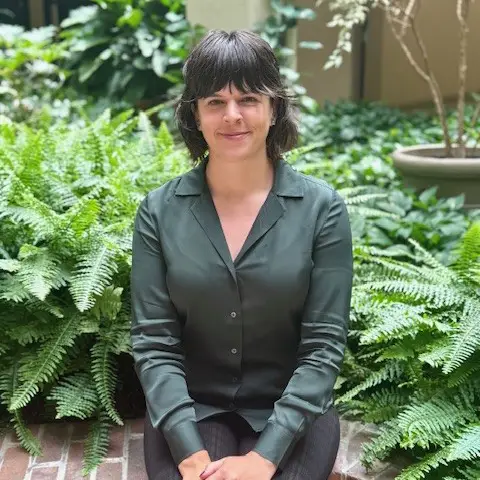
Elizabeth Tarulis
Doctoral Student, Department of Anthropology
Project Title: “Much time thereby unprofitably expended”? An Analysis of North American Tobacco Pipes in 17th-Century New England
Project Description
Tobacco (Nicotiana sp.) is an American plant that pervaded Europe and, eventually, the globe beginning in the 16th century. During this process, European colonists gained knowledge of consumption practices, botanical characteristics, and medicinal uses of tobacco from the Indigenous peoples with whom they interacted. Medical treatises, legislation, and other colonial documents shed light on how European colonists incorporated Indigenous scholarship on tobacco.
Although many English people readily adopted tobacco pipe smoking, they often altered the practice or tried to ban it entirely in an attempt to set themselves apart from Indigenous peoples. For instance, English smokers tended to prefer white rather than red clay tobacco pipes, a modification Charles Orser argues may be part of a broader move to emphasize the superiority of artificiality over the modern world. Nevertheless, archaeologists have recovered red pipes made from North American clays, many of which are shaped in European styles, at some 17th-century English colonial sites. This project examines North American-made tobacco pipes using documentary data, archaeological data, and Inductively Coupled Plasma-Mass Spectrometry (ICP-MS) analysis. Determining the distribution of these pipes in New England, many of which were recovered from sites integrated into commercial trade networks, will help establish the potential purpose(s) and meaning(s) of these English-style red clay pipes.
About Elizabeth Tarulis
Elizabeth Tarulis is a historical archaeologist with a focus on trade and colonialism in the Atlantic world. Her research has been supported by the Denbo Center, the UTK Department of Anthropology, and the Office of Research, Innovation, and Economic Development, as well as the Society for Historical Archaeology, EXARC, and the Maryland Archaeological Conservation Laboratory. Her dissertation analyzes how English colonists adapted tobacco use in 17th century New England. In addition to her dissertation research, Elizabeth runs an archaeological field school at a frontier tavern in Ohio and is part of a team analyzing evidence for the earliest manufacture and use of intestinal condoms in North America. In her time at the University of Tennessee, she has worked as a researcher and instructor of record for a variety of courses.

Eliza Alexander Wilcox
PhD Candidate, Department of English
Project Title: Fem(me)ininomenon: A Literary Prehistory of Femme Embodiment
Project Description
Fem(me)ininomenon: A Literary Prehistory of Femme Embodiment seeks to explore the evolving relationship between femininity and queerness from the early eighteenth century through the early twentieth century. In contemporary queer theory, there is a storied history of butch-femme identities and relationships; rather than being lesbian copies of heterosexuality, butch and femme both denaturalize the relationship between masculinity/cisgender manhood and femininity/cisgender womanhood, respectively. Despite this historical importance, fewer studies take up the historicity of femme in comparison to butch, especially in a pre-twentieth century context. Thus, the goal of this project is to continue denaturalizing the relationship between femininity and ciswomanhood while also locating a pre-history of femme embodiment, beginning in the eighteenth-century, through a combination of trans, queer, and disability studies.
About Eliza Alexander Wilcox
Eliza Alexander Wilcox (they/them) is a queer, nonbinary student of literature and history. Key to their research philosophy is the idea that contemporary experiences, while different from the historical, are not completely unique; therefore, if queer femme people (transgender and cisgender) undeniably exist now, then there must be a corollary in the past. Their other projects include an autoethnographic study of the HIV/AIDS crisis in the American South, studies on medical corsetry and other intersections between disability and fashion, and they have begun the early stages of collating a database of sex workers and sex work literature in eighteenth-century Britain.
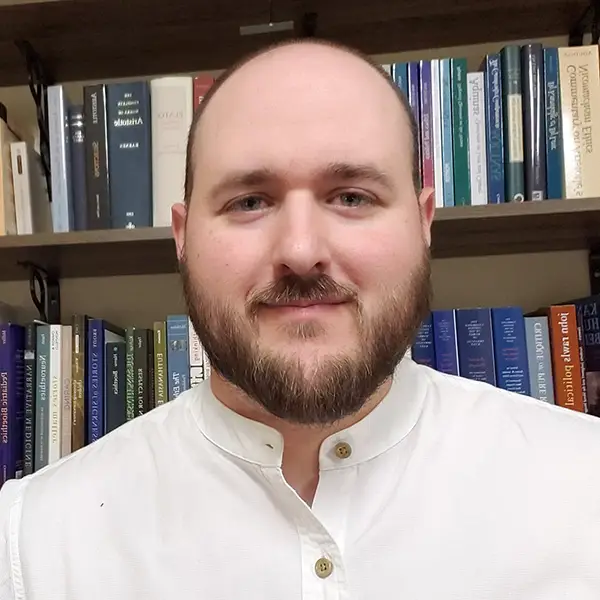
Andrew Ertzberger
Doctoral Candidate; Department of Philosophy
Project Title: An Ethics of Grief
Project Description
Grief is an inevitable and disruptive aspect of human life that often results in disorientation, loss of meaning, and alienation. As persons, we need to understand how it is possible to lose relationships that partially constitute our identities while continuing a life in which we are still in the process of practical formation. Hence, a question many people ask is: what does it mean to grieve well? What is ‘good grief’? In response, I offer a multifaceted, normative account of grief and grieving. I argue that grieving is a negatively balanced emotional process that is regulated by norms of truth preservation, relational value and responsibility, as well as humility and charity. In the process, I criticize the diagnostic criteria for so-called prolonged grief disorder and offer a philosophical view of complicated, ambivalent, or conflict-ridden grief.
About Andrew Ertzberger
Andrew Ertzberger is a doctoral candidate in Philosophy at UTK. He holds a Bachelors of Science in experimental psychology from the University of South Carolina and Masters degrees in theological studies and bioethics from Emory University. His primary research interests include moral psychology, theories of value, and practical ethics. He has secondary interests in the history of practical philosophy, environmental ethics, metaethics, and philosophical theories of love and friendship. In addition to his dissertation, he is working on papers on character and friendship, norms of forgiveness, and environmental virtue.
Marco Haslam Dissertation Fellow

Sara Creel
PhD Candidate; Department of English
Project Title: Rewriting the Bard: Shakespearean Fanfiction as Adaptation
Project Description
For almost as long as Shakespeare’s works have existed, people have been adapting them. From the stage to the pages of novels to the screen, each form of media has seen its fair share of Shakespearean adaptations. And as technology continues to evolve, Shakespeare’s works continue to be proliferated across new media. It is these ever-evolving digital afterlives that I set out to examine in my dissertation. My project looks at how Shakespeare is adapted in online spaces of fandom, specifically through works of fanfiction. It places works of Shakespeare fanfiction in conversation with the films of Shakespearean auteurs in order to understand how fanfiction is revolutionizing the practice of Shakespearean adaptation through offering online users the opportunity to not only engage with Shakespeare’s texts but also to rework or rewrite them. I argue that fanfiction allows Shakespeare’s texts, and Shakespeare himself, to become something that is shaped by a community rather than a single director, thus offering us a vision of the future of Shakespearean adaptation as one that is collaborative and interactive. In examining various fanworks and their treatment of Shakespeare and his plays, the aim is to understand how these works are changing the ways that we think about, engage with, and adapt Shakespeare.
About Sara Creel
Sara Creel is a doctoral candidate in Literature, Criticism, and Textual Studies in the Department of English, and she has a graduate certificate in Cinema Studies. She holds an MA in English from Mississippi State University where she wrote her thesis on feminism in the Shakespearean films of Julia Stiles. She has worked for the Department of English as a Graduate Teaching Assistant, teaching courses in first-year composition and serving as TA for Introduction to Film Studies. Her research centers primarily around Shakespeare, film, and new media studies (with an emphasis on fandom studies, fan culture, and fanfiction). She is currently working on her dissertation, which looks at how Shakespeare is adapted in online spaces of fandom (specifically, in works of fanfiction) and places these works in conversation with the films of Shakespearean auteurs in order to understand how the relationships between Shakespeare, author, and audience function in the age of new media.
“[As a fellow at the Humanities Center] I had the opportunity to work on my book daily without the distractions that come with the normal responsibilities of being a faculty member. I could come to work at the Humanities Center ready to think, write, reflect, brainstorm, and analyze—truly invest my time and energy in the historical process and everything it entails.”
—Brandon Winford, Assistant Professor, UT Department of History
UTHC Faculty Fellow, Class of 2016–2017